
The mismatch between PMI and core sector could also be due to the fact that while core sector is calculated year-on-year, PMI is calculated month-on-month.

A report published in British journal The Lancet reckons India's working population will surpass China's in the mid-2020s.

'Our first great challenge is to create 12 million new jobs each year, to make the demographic dividend an economic dividend.' 'We are nowhere near that,' points out Mohan Guruswamy.

Where do Indian workers stand when it comes to per capita income around the world?

Listening -- really listening -- to advisers in the government and outside would help. India has plenty of wise economists who have worked within the bureaucracy during previous crises, points out Rahul Jacob.

Chief Economic Advisor Arvind Subramanian says that he hopes GDP growth will be at the upper end of the 7-7.5 per cent range.

India needs to work on economic parameters to outpace China.

'The Indian economy and the Indian financial sector today remain resilient and much better placed.'

'Vaccination is very important for an economy to start functioning properly.'

Even as both India and the world struggle to re-build after COVID-19, they face slow-burn problems that could develop into full-blown crises, observes T N Ninan.

'Banks have to be braver, willing to take more risks and give confidence to the customer,' observes Joydeep Ghosh.

The Economic Survey seems convinced that 2019-2020 saw the bottom of the economic cycle, points out Abheek Barua, chief economist, HDFC Bank.

If Nirmala Sitharaman does indeed present a 'never-before' like Budget on February 1, going by her promise, she would create a new benchmark for post-contraction Budgets, observes A K Bhattacharya.

The extra borrowing implies Jaitley will have extra spending space in the Union Budget for FY19, the last full one before the 2019 general election

The government on Monday forecast annual economic growth to accelerate to 7.4 per cent in the fiscal year ending in March 2015

The sample size of 8,100 farmers across 19 states has not changed in the last three decades, and the methodology of the sample survey too remains unchanged

The April-June quarter GDP slipped to 7 per cent from 7.5 per cent.

'Instead of doing reforms and restructuring, the present government is busy with the perception that everything is fine and the economy is hunky-dory.' 'Such hollow perceptions are very dangerous for the Indian economy in the long run.' 'The real risk to India is the lack of decent employment opportunities for youth in general and educated youth in particular.'

The average rate of COVID-19 vaccination in the country has been 10.8 million per week. At that rate, it will take India till December 2024 to complete two billion doses.
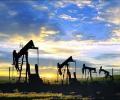
Oil still lubricates the global economy and could make it seize up. Prices above $110 a barrel raise the spectre of previous shocks. Judged by fundamental supply and demand, there is no reason for prices to remain so high. But, a sustained spike would be a big problem for the global economy.

FM is seen to step up the pace of sales of state assets and curb spending

"If we are not getting anything then I think it is end of story for Vodafone Idea," Kumar Mangalam Birla said at the HT Leadership Summit when asked about the future of Vodafone Idea in absence of a government relief on payment of Rs 53,038 crore dues.

Defence experts want defence expenditure to be at 3% of GDP, which they consider minimum to counter the two-front threat from China and Pakistan, internal insurgencies, and dominating a 7,500 km coastline and the Indian Ocean beyond. What Arun Jaitley has given India this Budget is 2.16% of GDP, observes Ajai Shukla.
A fiscal deficit of 6.8 per cent of GDP, up from 5.5 per cent postulated in February's Interim Budget, means an additional stimulus of nearly Rs 80,000 crore (Rs 800 billion).
There is a near consensus that at least a 25 basis points cut, if not 50, can be expected in the June policy.
India's information technology sector is likely to post a single-digit growth rate of 9 per cent in fiscal 2008-09, as measured in gross domestic product calculations, according to a senior government official. The IT sector, which constitutes 3.5-4 per cent of India's GDP, grew at an average rate of around 25 per cent in three years up to March 2008. Thus, the sharp fall in growth rate is cited as one reason for drop in growth rate of the Indian economy in fiscal 2009.
Planning Commission member Abhijit Sen on Wednesday said growth in the next fiscal may reach seven per cent due to the stimulus packages already introduced. On deflation he said, "I personally do not see any threat of generalised deflation, though it (might happen) in some sectors."

India likely to overtake China on strong GDP growth.

It suggested reforms in the real estate sector.

Economists have said if a stimulus is needed it should be different from what was provided in 2008-09, when the economy faced the ripple effects of a global meltdown following the Lehman Brothers collapse.

'Will Mr Jaitley listen, or is that expecting too much in pre-election season?' asks T N Ninan.

'Just see what kind of political, social and economic impact it will have when the number of unemployed goes up four times in one year suddenly.'

The deteriorating situation in China, a market that businesses around the world rely upon for growth, has spooked investors and prompted warnings from top companies like Apple.

Consumer products like mobile phones and laptops may become cheaper as the overall taxes on goods are likely to come down

Lower revenue collection puts upward pressure on government borrowing, ensuring that it deviates from the glided path of debt reduction

Petrol price can go down to Rs 75 a litre across the country if brought under the ambit of the Goods and Services Tax (GST), but there is a lack of political will, which is keeping Indian oil product prices at one of the highest in the world, economists at SBI said on Thursday.

It's high time we now turn the popular question on its head -- when there is no growth in jobs for several years, how can the real GDP grow at 7 per cent per annum, says Mahesh Vyas.

'Amartya Sen is a citizen of the country who has every right to criticise or give his opinion on a policy decision.' 'Get back at him! Why get back at Harvard?'

Theoretically, the currency with the public should expand in sync with the nominal income, which again moves in relation to the nominal growth rate of the economy. But the correlation breaks easily when other factors come into play, says Anup Roy.

Rise in vegetable prices can reverse the benefits of low oil prices.
